The Tabiri Framework
A Canonized Charter for the Global Creative Order
Cr. Gyata Akwasi Tabiri, FCO
First Edition • 2025
Dedication
To the ones who shaped the way,
before there was a map, a title, or a name.
To Professor Kate Clair,
a natural guide, quiet flame-my white mother in craft and conviction.
To the late Matthew McKernan,
who armed my hands with courage-my white father.
May his children walk in his echo.
To Professor Kevin McCloskey,
retired in form, never in spirit.
The advisor who helped me break through the wall no one else could see.
To Mr. Ignatius Arthur,
who never learned the meaning of “No, I can’t”,
and made sure I didn't either.
To Dr. Seth Gyamfi,
who reminded me-again and again,
that moving forward was still an option.
To the future and its unborn children,
whose names we do not yet know,
but whose creations will remind the world we were here.
Founding Statement
In the Beginning, There Was the Creative.
Before blueprints, before brands, before the tools of trade, there was the instinct to shape, express, and bring forth. It is this ancestral force that moves through every brushstroke, wireframe, rhythm, and story we call creative work.
Yet in a world that increasingly depends on creativity to define its culture, its economy, and its collective future, the creative professional remains, too often, unprotected, unrecognized, and undefined.
The Tabiri Framework exists to change that.
This charter was not written as a reaction. It was revealed through necessity, distilled from years of labor, reflection, and a clear sense of calling. It is not simply a document; it is a covenant between those who create and the future they are entrusted to shape.
We declare:
- That creativity is not a hobby; it is a human power.
- That those called to create deserve structure, protection, and recognition.
- That there must be a standard, codified, respected, and upheld.
- That professional identity, ethical accountability, and generational excellence must be the pillars of our work.
The Tabiri Framework is that pillar.
It is canonized not by self-importance, but by clarity of purpose. It is global because the creative spirit knows no borders. It is a charter because it births a new order, one defined not by chaos, but by creative sovereignty.
To every designer, storyteller, innovator, and cultural architect, this is your summons.
Let this be the foundation we build upon.
Let this be the era we define together.
Let this be the moment the Creative stands.
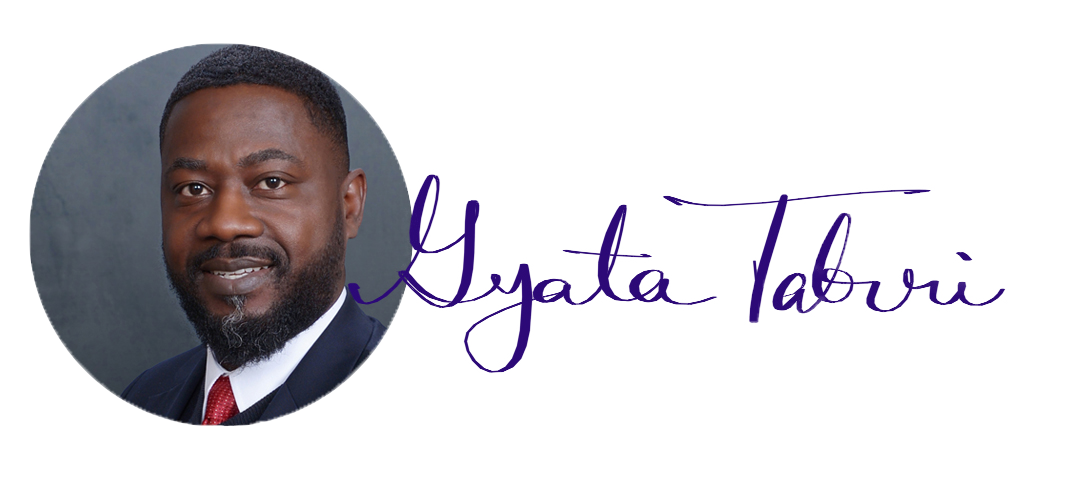
Cr. Gyata Akwasi Tabiri, FCO
Architect of the Framework
Declaration of Purpose
The Tabiri Framework exists to define, protect, and elevate the professional identity of creatives across disciplines and geographies. It is not a manifesto. It is a working charter, a living standard created by creatives, for creatives.
In an era where creativity drives culture, commerce, education, and technology, the individuals who generate that value remain largely undefined in professional terms. Titles are vague. Expectations are inconsistent. Accountability is optional. Recognition is rare.
This framework addresses that gap.
It offers a structure through which creatives can be credentialed, held to ethical standards, and represented in systems where decisions about design, communication, and culture are made. It does so without policing expression or dictating taste. Its role is not to narrow the creative path, but to protect and dignify the journey.
The Tabiri Framework serves:
- Practicing creatives seeking recognition and protection
- Educators shaping the next generation
- Institutions establishing standards
- Communities preserving cultural continuity through creative work
Its purpose is simple: to give creative professionals a name, a standard, and a structure worthy of the work they already do.
Invocation of Creative Lineage
Origins & Ancestors of Craft
Before there was a framework, there was a lineage.
And before there was a lineage, there was the Creative.
I call upon the artisans of Mesopotamia,
the scribes of ancient Kemet,
the calligraphers of imperial China,
the weavers of Kente in Ghana,
the sand-painters of Diné lands,
the builders of Machu Picchu,
and the sculptors of Ife whose bronze still breathes.
I honor the mothers who dyed fabric with roots,
the fathers who beat rhythm into skin,
the elders who tattooed memory into flesh,
and the nameless hands that carved identity into stone.
These were not workers. They were world-shapers.
They were never “content creators.” They were custodians of meaning.
To them, the framework bows first.
Global Practices & Cultural Lineages
I invoke the mosaicists of Byzantium,
the stained-glass artists of Chartres,
the zellij tile workers of Fez,
the textile queens of Tamil Nadu,
the bead-workers of the Zulu kingdom,
the griots of Mali who sang genealogies from breath alone.
I name the ballet dancers of St. Petersburg,
the Butoh performers of Tokyo,
the flamenco singers of Andalucía,
the Sufi poets of Istanbul,
the T’boli dream-weavers of Mindanao.
I honor the creators who build without credit,
the street muralist in Bogotá,
the carpenter in Nairobi with no blueprints,
the sound engineer in Lagos remixing survival into joy,
the animator in Seoul breathing spirit into pixels.
Creativity is not a passport.
It has no center. It has only pulse.
Performers, Disruptors, and Boundary-Breakers
I call on the jazz soloist improvising protest,
the spoken-word poet rewriting memory,
the drag performer turning body into political altar,
the playwright staging truth inside fiction.
I speak for the prisoner whose sketch made a warden rethink the meaning of justice.
The hacker whose code cracked open surveillance.
The exile who tattooed resistance into silence.
The whistleblower who designed new language from the wreckage of lies.
Not all creators are celebrated.
Some are criminalized.
But their ideas still reshape the world.
We invoke not just what is permitted,
but what is possible when the Creative acts.
Invisible Creatives & the Universal Current
I honor the teacher who turns a classroom into a constellation.
The nurse who draws cartoons on IV bags.
The accountant who brings order like poetry.
The policy writer who designs law with equity.
The strategist, the peacemaker, the organizer,
all architects of the unseen.
I name the parent turning hunger into celebration,
the migrant rebuilding beauty in exile,
the child who drew on walls because no one gave her paper.
Creativity is not career.
It is courage.
It is the voice that rises when silence has overstayed.
This framework is not the beginning.
It is the honoring of what has always been.
If you have created, under spotlight or shadow,
with tools or with nothing at all,
then this is yours.
You are Creative.
You are Inheritance.
You are Lineage.
You are Home.
How to Use This Framework
This framework is not meant to be read once and filed away. It is designed to be returned to, referenced, adapted, and lived.
Whether you are a creative professional, a student, a policymaker, or a cultural leader, here's how to engage with what follows:
- Read it as a Declaration.
This document names what many creatives have long felt: that their work is powerful, and that their profession deserves structure. Let these pages affirm and articulate what may have gone unnamed. - Use it as a Guide.
Each principle and policy outlined here is intended to help shape individual practice and collective governance. Use the titles, designations, and ethical pathways as a benchmark for what a dignified creative identity can look like. - Apply it Professionally.
Institutions, schools, companies, and guilds are invited to align with the framework's credentialing pathways, code of conduct, and fellowship structures. This is not a theory, it is a blueprint for professional recognition and accountability. - Translate it Locally.
This framework is global in spirit, but adaptable by region, language, and cultural context. If something here needs to be interpreted through your community's lens, do it. Creative sovereignty includes the freedom to reframe. - Return to it Often.
Creative practice evolves. So does context. This framework is a living document. As the world changes, it invites updates, annotations, and new contributions. Don't treat it as scripture. Treat it as soil. - Share It.
Let others see themselves in it. Use it to validate young artists, guide creative education, influence policy, and support underrepresented voices. A framework only matters if it finds its way into real hands.
This is not a rulebook.
It is a mirror, a compass, and a door.
Open it often, and walk through.
All updates must meet the following conditions:
- A majority of the Council must approve the proposed changes.
- At least two members must have signed the previous edition.
- All living Council members—past or present—must be formally notified of the update process, even if not voting.
- The updated edition must be signed by the active Council and entered into the Global Registry of Editions.
Translators may adapt the framework into their respective languages, but must not alter its content or principles.
Any translation must stay current with all formal updates.
All certified translators will be recorded in the Registry of Custodians.
To be summoned to the Council is not a title.
It is a creative obligation—to memory, to meaning, and to the future.
This framework does not evolve casually.
It evolves with ceremony, with accountability, and with reverence for all who build the world through creative force.
Part I
#unprotected-creative #case-for-canonization #creativity-public-good #flexner-to-tabiri #beyond-job-titles